“They’re going to fall out anyway” is one of the most common ideas about baby teeth. Yet baby teeth play an important role: they help a child chew and speak, keep the space for the permanent teeth and influence how those teeth come through. Some problems of the baby teeth can disturb the development and eruption of the permanent teeth.
When should a child first see the dentist?
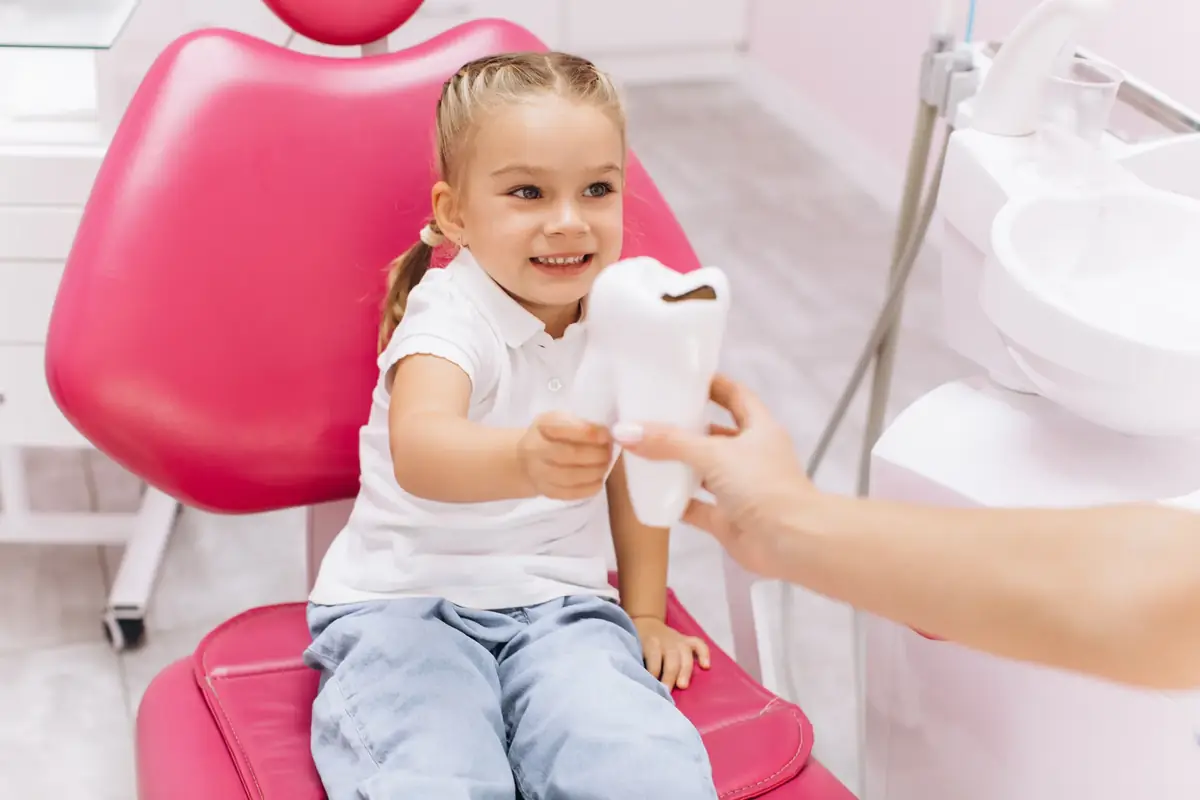
The general recommendation is a first visit around the age of one, or soon after the first teeth appear. At this age the visit is mostly a chance to get acquainted: the dentist looks at the teeth and gums, and parents get advice on brushing, diet and habits such as dummies or night-time bottles. The earlier a child comes, the more the practice becomes a familiar place rather than a scary one.
Prevention matters as much as treatment
Children’s dentistry also includes preventive treatments, because preventing decay is as important as treating it.
Fissure sealants. The chewing surfaces of back teeth have small grooves where food and bacteria collect easily. Sealing means covering them with a flowable material that hardens and makes the surface easier to clean. It is painless and does not involve drilling. It is usually done on permanent molars soon after they come through.
Fluoride. A professional fluoride application strengthens the enamel and makes it more resistant to the acids produced by bacteria. Your dentist will tell you how often it is needed, based on your child’s risk of decay.
Professional polishing. For children, a cleaning at the practice removes plaque and stains and is a good opportunity for young patients to get used to the instruments without the pressure of treatment.
When a baby tooth has a cavity
Decay progresses quickly in baby teeth because their enamel is thinner. Left untreated, it can reach the nerve and cause pain and infection, which may also affect the permanent tooth underneath. That is why cavities in baby teeth are treated: with fillings suited to baby teeth and, when needed, with root canal treatment. Extraction is done when the tooth can no longer be saved or is in the way of the permanent tooth.
How to prepare your child for the visit
- talk about the dentist simply and positively, without words like “pain” or “needle”;
- never use the dentist as a threat (“if you don’t brush, I’ll take you to the dentist”);
- choose a time when your child is well rested;
- read a book or watch a cartoon together about a visit to the dentist;
- let them bring a favourite toy.
Habits that protect teeth at home
- brushing starts with the first tooth, using a soft brush suited to the child’s age; until about 7–8, children need an adult’s help to brush;
- use the amount of toothpaste appropriate for their age, as your dentist recommends;
- limit sweets and sugary drinks between meals and don’t let your child fall asleep with a bottle of milk or juice;
- water is the best drink between meals.
In short
Baby teeth deserve the same care as permanent teeth. An early first visit, regular check-ups and a few simple preventive steps, such as sealants and fluoride, help your child grow up with healthy teeth and without a fear of the dentist.
This article is for information only and does not replace a consultation with your dentist.
Book a consultation
DentAlert, Str. Rezervelor 89, block 2, Militari Residence. 0765 798 518 · Children →